



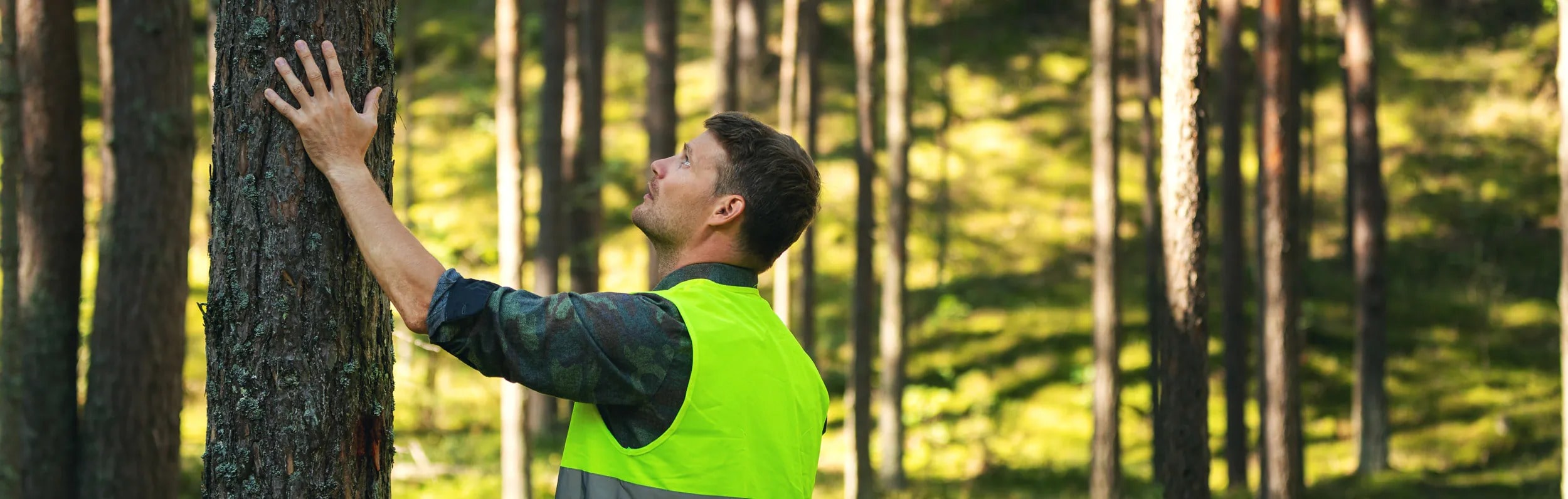
The Truth About Playset Wood
Why We Choose Southern Yellow Pine Over Marketing Gimmicks
The wood in your playset is the single most important choice for your family's safety. Many brands use 'Pacific Cedar', which is actually lightweight, imported China Fir meant to sound like premium US wood.
At Wickey, we choose heavy-duty, American Southern Yellow Pine. Here's exactly what that means—the species we buy, the grade we insist on, and what your timber will look like when it arrives.
-
Built for Safety

High-density wood provides more stability and superior fastener grip, keeping the structure secure for years.
-
Maintenance-Free Protection

Our professional, non-toxic pressure treatment protects the wood from the inside out. No yearly sealing.
-
American Grade 1 Strongwood

We buy Grade 1 Southern Yellow Pine, sourced from sustainable US forests and trusted by home builders for its strength.
The 'Pacific Cedar' Myth
The term 'Pacific Cedar' is a marketing invention used to describe China Fir (Cunninghamia lanceolata). It is not a true cedar or fir. This misleading name is designed to make imported wood sound like the strong, durable North American woods trusted by homebuilders.
The Truth About Playsets in a Box
This deception is a direct consequence of the "playset-in-a-box" business model, which prioritizes low shipping costs over structural integrity. To fit everything into parcel shipping, critical design and material compromises are made.
- Thin Components: Boards are often thin and can't bear much weight, which compromises their safety and durability.
- Undersized Lumber: The wood is not sawn to traditional North American standards, reducing its load-bearing capacity.
- Limited Swing Beams: Swing beams are formed of separate boards glued together, rather than solid wood.
- Short Warranties: Warranties are often short and full of fine print—a clear sign the manufacturers don't expect their products to last.
"If a company is not transparent about the very wood their product is made from, what other compromises might they be making in hardware, safety standards, and overall manufacturing integrity?"
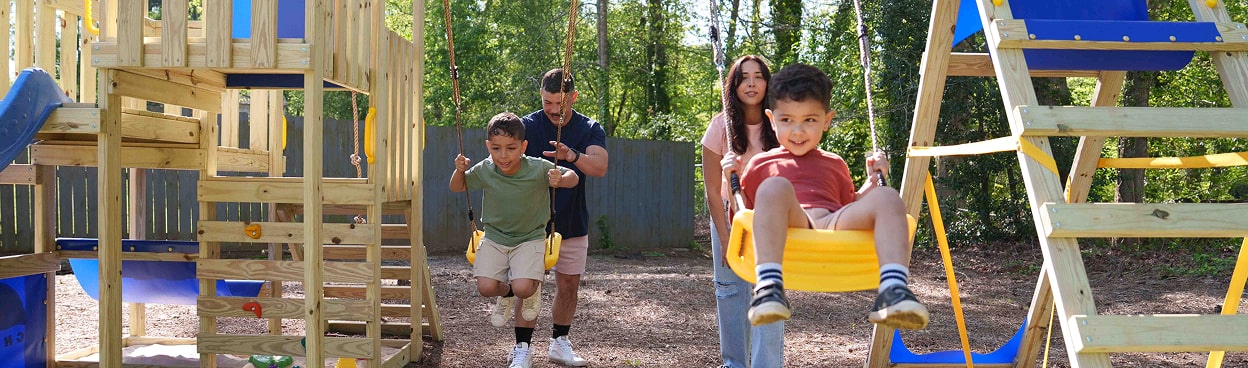
The Professional's Choice: American Southern Yellow Pine
When architects and builders need wood with uncompromising strength, they turn to Southern Yellow Pine (SYP). This isn't a niche "playset wood"; it's the premier structural material that builds America—the trusted material for the framework of our homes, decks, and bridges.
The superiority of Southern Yellow Pine isn't opinion—it's measurable, scientific fact.
| Feature | Southern Yellow Pine (Wickey) | China Fir ('Pacific Cedar') |
|---|---|---|
| True Identity |
A true Pine (Genus Pinus)
|
China Fir (Genus Cunninghamia)
|
| Origin |
USA (Southeastern states)
|
China
|
| Density |
High (up to 60% denser)
|
Low (lightweight)
|
| Hardness (Janka) |
High (690–870 lbf)
|
Low (often below 400 lbf)
|
| Structural Strength |
America's strongest softwood
|
Not rated for structural use in the USA
|
| Fastener Grip |
Exceptional
|
Poor; prone to splitting
|
| Treatment |
Ideal for deep pressure treatment
|
Superficial, "color-only" stain
|
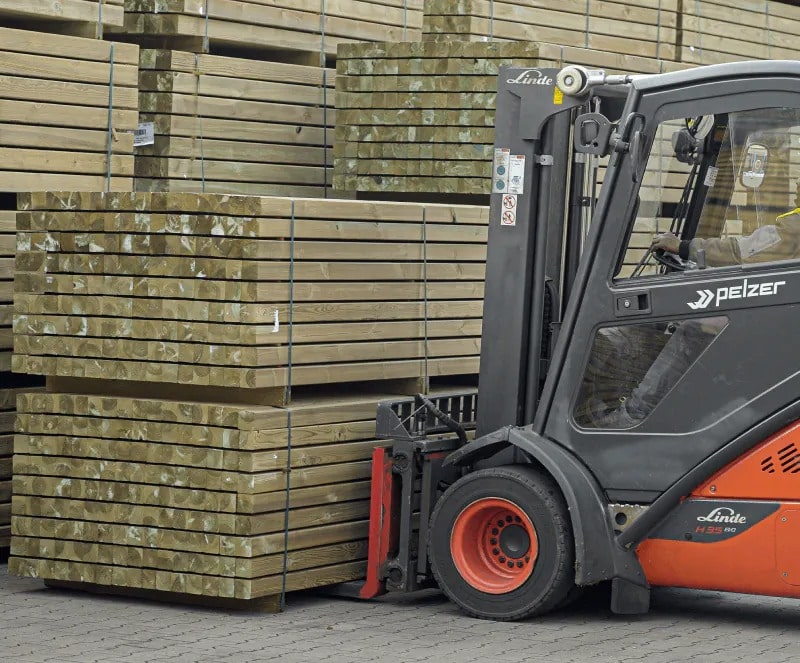
The Wickey Advantage: Built To Last a Childhood—Not Just a Season
The high density of SYP provides stability and a stronger fastener grip—a critical safety feature that keeps your playset safe and sturdy over years of vibration and stress.
Most importantly, our professional-grade Micronized Copper Azole (MCA) pressure treatment infuses a child-safe preservative deep into the wood's core. That means true, long-term protection against rot and insects from the inside out—not a coat of color on the surface.
The Wickey Advantage
- Professional, deep-penetrating treatment
- Non-toxic and child-safe
- No yearly sealing
The "Playset-in-a-Box" Trap
- Superficial, "color-only" stain
- Shifts the maintenance burden to you
- Annual sealing to keep the warranty valid
Not All Southern Yellow Pine Is Equal
Choosing the right species is only half the story. The grade of that timber is what separates a playset that looks good on day one from one that's still standing strong on year 10.
We source our Southern Yellow Pine from premium domestic suppliers across Alabama, Georgia, and South Carolina.
Mass-market playsets rely on lower structural grades to hit a price. Wickey buys Grade 1 lumber for every board, in every size.
"The wood is better quality than the cheaper cedar sets."
— Wickey customer
The quality difference of Grade 1 timber
| Feature | Wickey Playsets (Premium Grade 1) | Budget Construction Lumber (Grade 2 & 3) |
|---|---|---|
| Primary Design Intent |
For high-quality finishing work where structural strength and
a premium look both matter.
|
For general construction and framing. Grade 3 is not stress-rated and is meant
for basic utility.
|
| Knot Frequency & Size |
Very few knots per board. A clean look and maximum structural
integrity.
|
Numerous, larger knots that can structurally impact the wood under stress.
|
| Regulatory Oversight |
Strictly regulated and routinely inspected under the rigid
rules of the Southern Pine Inspection Bureau (SPIB.org).
|
Variable yard-by-yard quality.
|
Understanding Your Wood: What's Normal, and What Isn't
Real wood is an organic material. It breathes, it moves, and it responds to the weather around it.
Because we build with heavy-duty solid timber instead of thin, machine-uniform boards, your playset will show natural traits that some people mistake for defects. Under official US timber grading guidelines, these characteristics are normal, safe, and fully allowed within high-grade lumber standards.
Here's what you might spot.
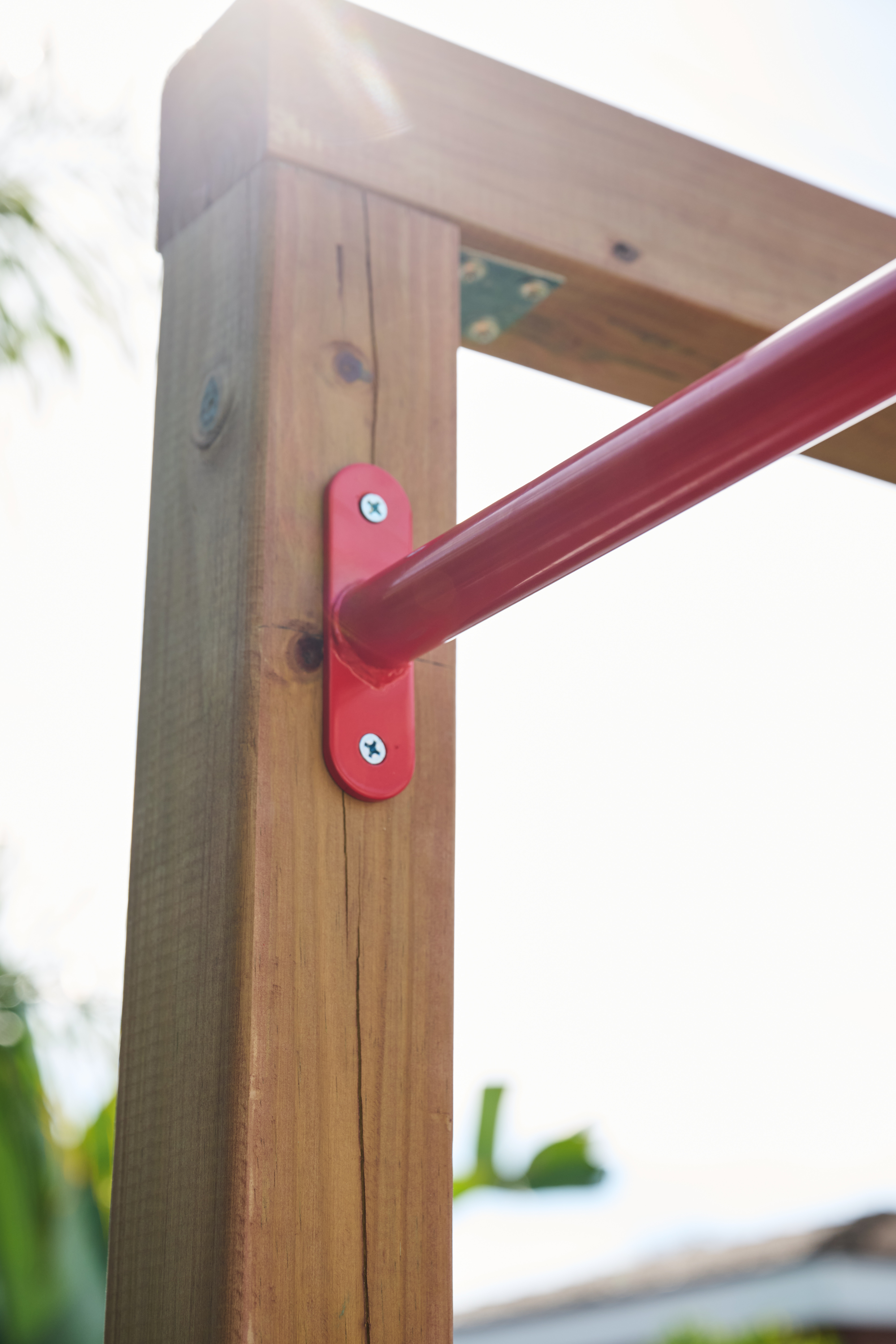
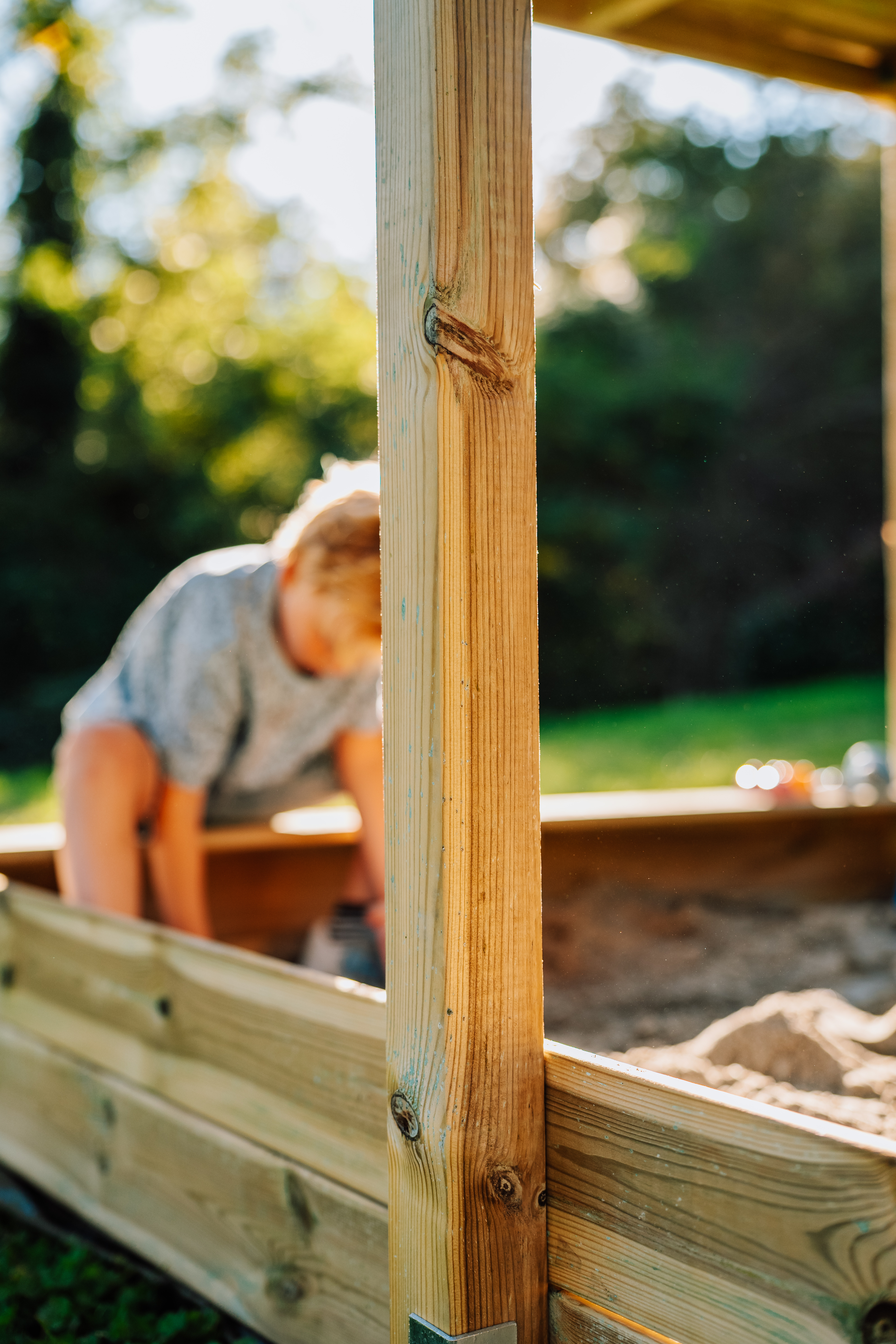
Surface lines and checks
What you see: Fine lines running along the grain of a beam.
What it means: Solid wood naturally breathes. Under official SPIB standards, surface seasoning checks are a normal part of the wood's natural state. They sit on the surface and don't penetrate the core, so they don't compromise the structural safety or integrity of the beam.
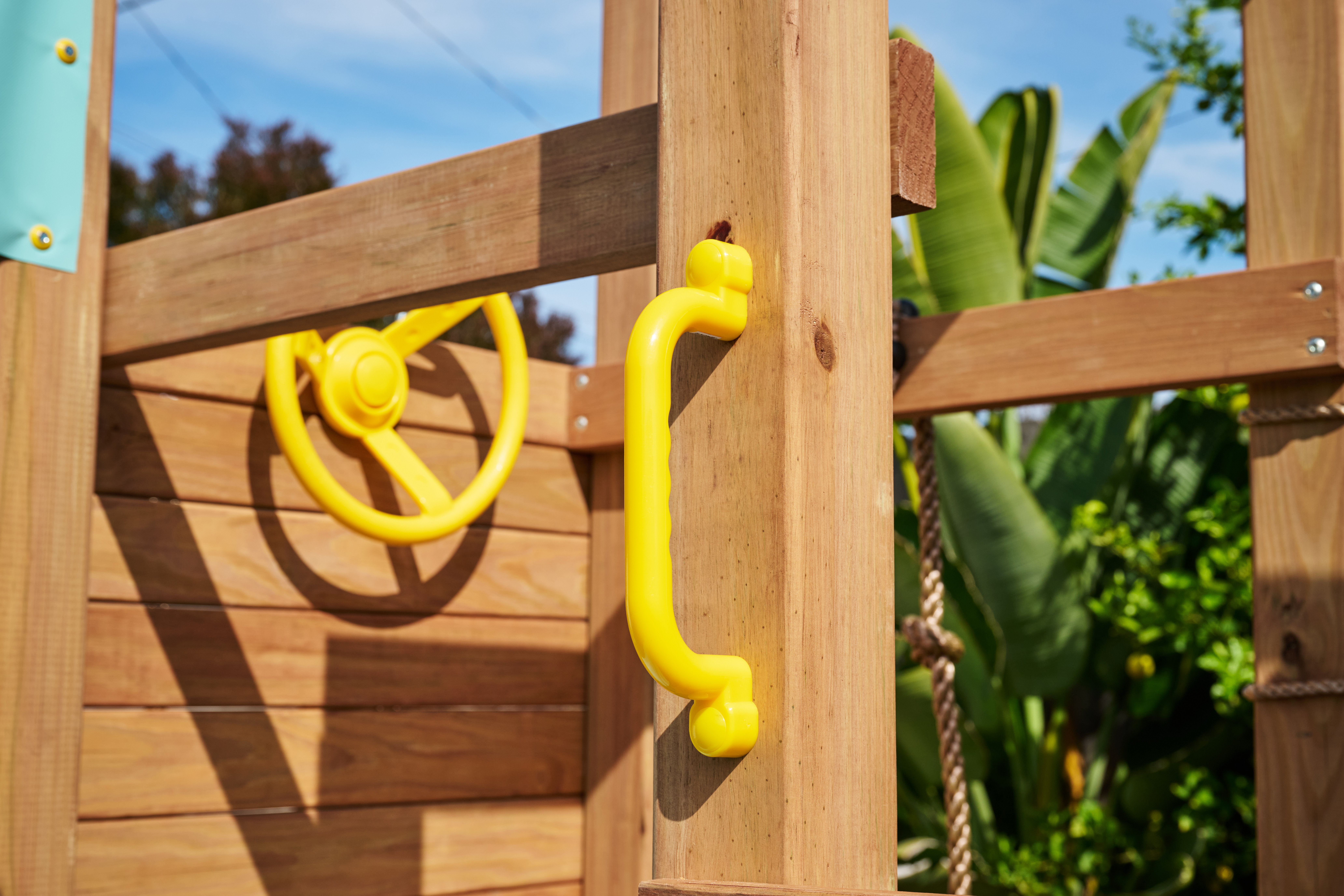
Green-toned protective markings
What you see: Faint green hues or lines across the timber.
What it means: That green is proof of high-grade defense against the elements. It's the visible signature of the Micronized Copper Azole (MCA) pressure treatment that protects your playset from decay and rot. Highly effective, safe for families, and a hallmark of premium outdoor lumber.
Small knots, wane, and slight movement
What you see: The occasional small knot, or a softly rounded edge where the board met the outside of the tree.
What it means: To keep every board stable, our wood is kiln-dried to a target moisture level below 12%, which we check with digital moisture meters. Slight waning can occur during drying. Grade 1 rules explicitly permit minor wane, because these characteristics are completely safe—and they disappear once the heavy structural hardware is fully tightened during assembly.
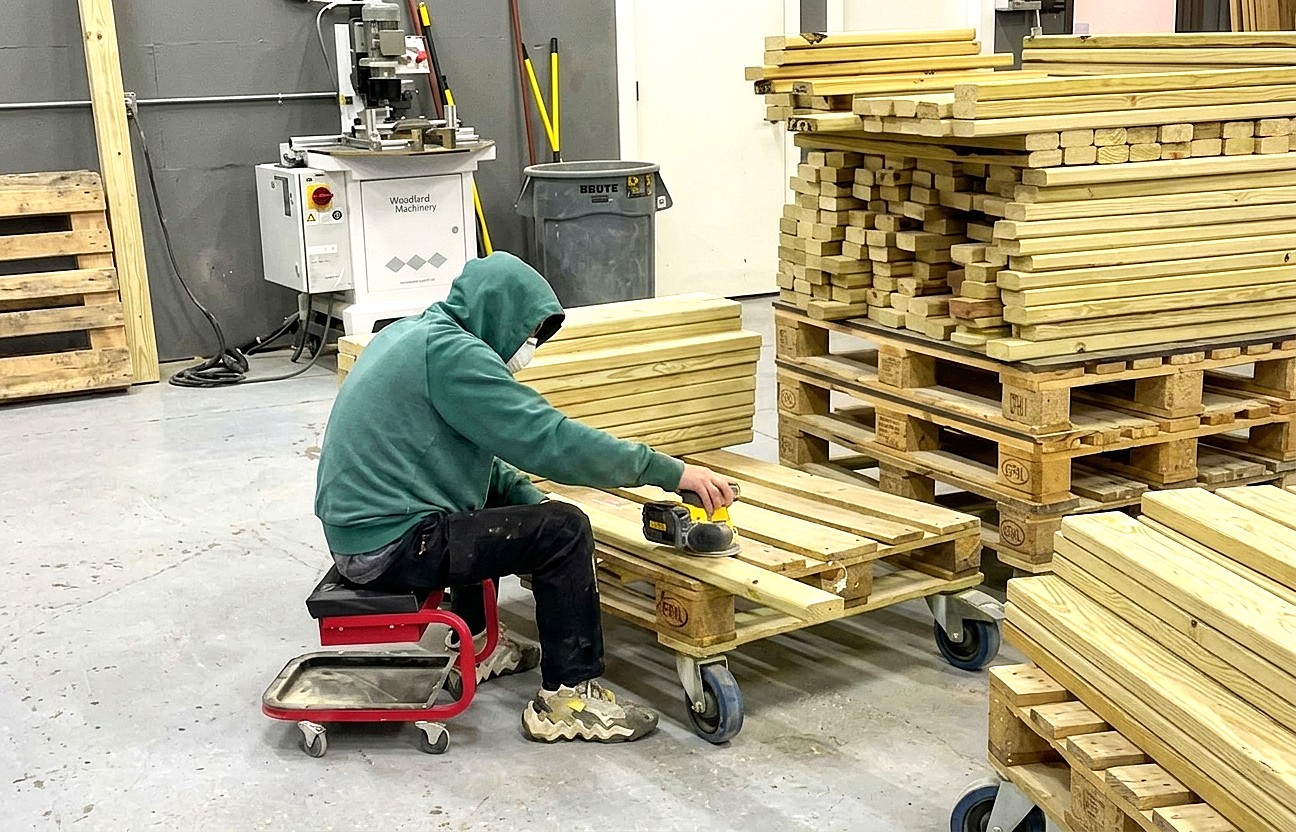
Hand-Finished, Every Single Board
We don't ship raw lumber straight from the yard. Every piece of Wickey timber is inspected by hand and sanded by our team, smoothing rough spots and cleanly removing the fraying that happens on raw-cut ends.
We'll be straight with you: no genuine wood product left out in the weather can be guaranteed 100% splinter-free. What we can promise is every manual step possible, on every board, before your playset leaves our facility.
That's a slower way to build a swing set. It's also the difference you feel under a small hand.
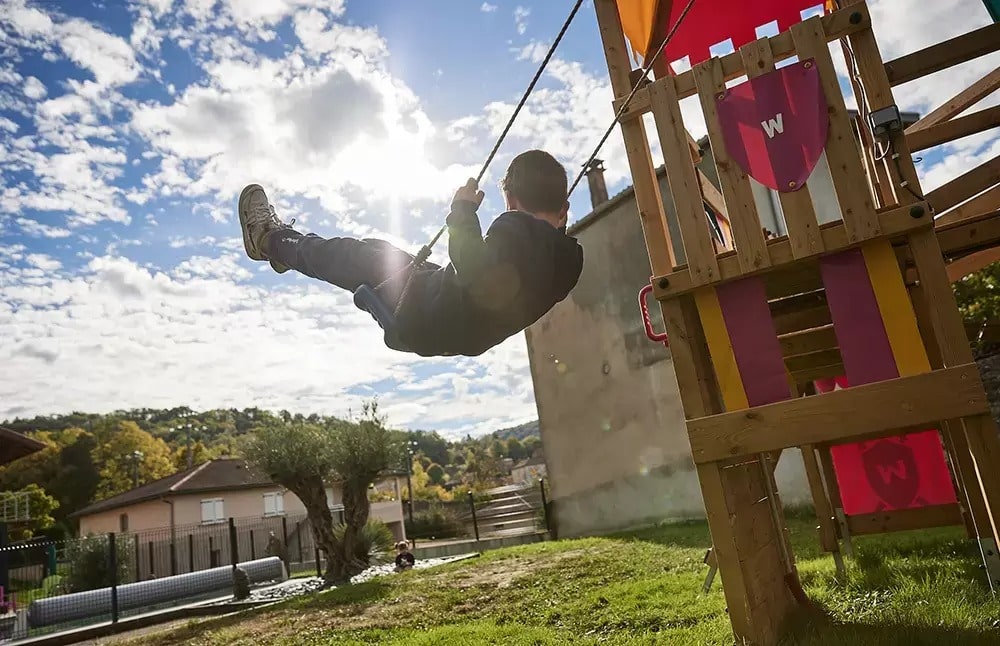
Choose a Playset Built to Last Their Childhood
The choice is simple. You can buy a flimsy, deceptively-named imported playset designed to last a season. Or you can invest in a Wickey playset: American Grade 1 Southern Yellow Pine, professionally treated, hand-finished, and built to last an entire childhood.
Explore the Wickey CollectionFAQ
No. It is a marketing name for China Fir (Cunninghamia lanceolata), which is not a true cedar or fir. The name is used to borrow the reputation of superior North American cedars.
Yes. It is one of the best choices due to its incredible strength, high density, and ability to be pressure-treated for long-term protection against rot and insects. It's the same wood trusted by professionals for building homes and decks.
Those are surface seasoning checks—a normal characteristic of solid timber as it adjusts to your local weather. Under official SPIB grading standards, surface checks are expected in high-grade lumber. They stay on the surface, they don't reach the core, and they don't affect the structural safety of the beam. A board with no checks at all is usually a board too thin to have any.
That's the Micronized Copper Azole (MCA) pressure treatment doing its job. Faint green hues are the visible signature of a preservative driven deep into the wood to protect it from rot and insects. Non-toxic, safe for families, and a hallmark of premium outdoor lumber. The tone evens out as the wood weathers.
No. Knots are simply where a branch once grew, and every piece of real timber has some. What matters is how many and how large—which is exactly what lumber grading measures. Wickey buys Grade 1 lumber, so knots are few and small. Budget playsets built from Grade 2 or 3 lumber carry far more, and far larger, knots.
Wickey playsets use Southern Yellow Pine, which is up to 60% denser and significantly stronger than the China Fir used in other sets. This provides more stability and superior fastener-holding power. We also buy Grade 1 lumber for every board, and our wood is professionally treated with a non-toxic preservative for lasting safety.
No. Our boiler-pressure impregnation process protects the wood from the inside out, so there's no yearly sealing. Many competitors ask you to seal their playsets annually as a condition of their warranty, offloading the cost and labor onto you.